
Solar Power
Solar power refers to electricity produced through techniques that transfer the sun’s light into usable forms of power.
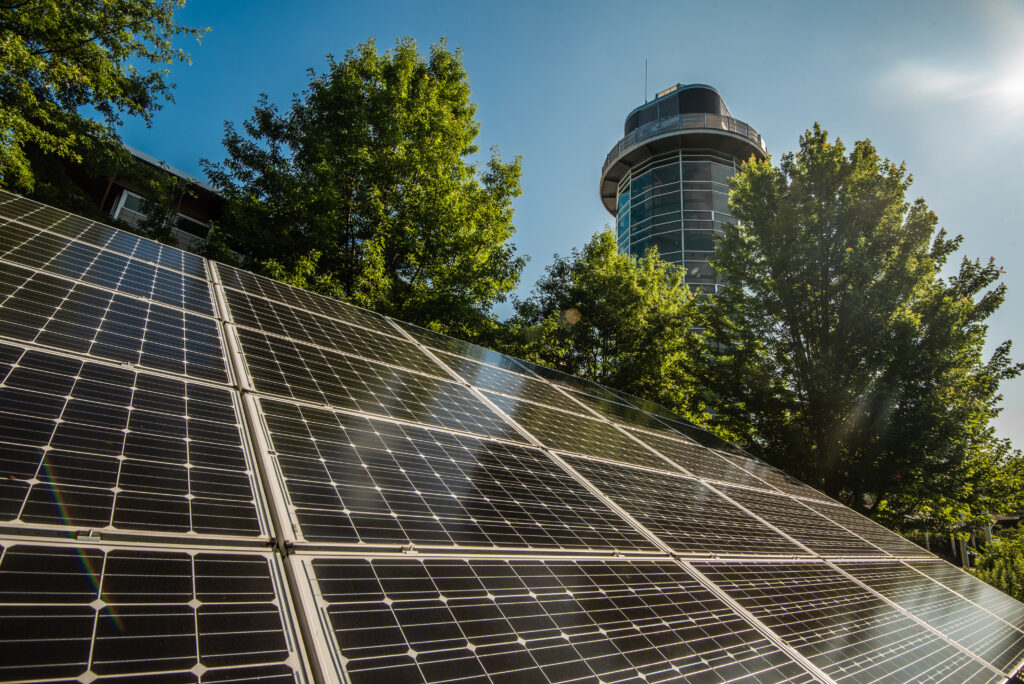
Image: Solar array at Tom Ridge Environmental Center, Erie, PA.
Image credit: Huck Beard
Solar energy is harnessed either through photovoltaics (PV), technology that converts light directly into electricity, or through concentration methods that focus the sun’s light to generate heat that is then converted into electricity. Both energy strategies can be deployed on a utility scale in centralized power plants, while PV can also be implemented through local, small scale solar panel installations. Additionally, solar energy can be used as direct thermal heat in buildings. Read more about passive solar methods and thermal storage by clicking the button below.
How It Works
SOLAR PHOTOVOLTAICS
PV uses advanced semiconductor materials that can transmit electrons when struck by light. When these semiconductors are fabricated into solar panels, they generate an electric current when exposed to sunlight. Additionally, the semiconductors can be deposited as a small layer, called a thin film, on other surfaces that are less efficient than whole cells, but more flexible in usage.
The electric current, however, isn’t directly compatible with the electricity grid, so PV systems generally require the use of inverters — electrical components that transmit the direct current produced by the panel into grid-ready alternating current.
Solar panels can generate electricity from any sunlight, including light reflected off other surfaces. Some solar panels are bifacial, having photovoltaic materials on the front and back, which allows them to generate additional electricity from reflected light. Bifacial panels work better on ground mounted systems or above parking areas, as the additional height between the panel and ground allows for more light to reach the back of the panels. In snowy climates, bifacial panels provide significant benefits, being able to generate electricity even when the front of the panels are covered in snow. This can increase the system’s production by around 20% compared to monofacial panels.
PV installations can be categorized by how the panels face the sun. In small scale solar, fixed tilt arrangements are most common, where the panels are set and can’t be moved. In the Northern Hemisphere, the best direction to face panels is south, while the optimal tilt angle is based on latitude.
To improve system generation, panels can have single axis or dual axis tracking, where the panel can change its orientation to better face the sun. In single axis tracking, the panel rotates on one axis, either changing the panel tilt or the direction the panel is facing, which can increase production by 20-35% compared to a fixed axis system. In dual axis tracking, the panels can rotate on two axes, allowing them to change both panel tilt and direction, increasing production by 30-45% compared to a fixed axis system.
BUILDING INTEGRATED PHOTOVOLTAICS
While most deployed photovoltaics are used in traditional arrays, there are many other ways to utilize PV technology. A growing area of PV use is in Building Integrated Photovoltaics (BIPV), which refers to the use of photovoltaic materials in place of conventional building materials.
The most common BIPV products are roofing materials. These are used in place of traditional roof tiles and shingles, but are made of PV materials. Solar roof tiles are growing in popularity, as they provide numerous advantages compared to roof mounted panels. They are more aesthetically pleasing, as they strongly resemble traditional roofing materials. They also weigh less, and do not have any additional mounting hardware, eliminating penetration points through the roof and minimizing the possibility of leaks.
In addition to solar roofing materials, there are also solar façade systems. This type of BIPV is installed on the exterior of the building, and can be customized to specific architectural designs and colors. Similarly, PV can also be integrated into glass façades and windows. One limitation of solar glass is the tradeoff between transmitted light and electrical generation. The more light that is allowed to pass through the glass, the less light is absorbed and turned to electricity. Regardless, BIPV is a burgeoning sector that provides substantial opportunities for increasing electricity generation within the built environment.
CONCENTRATED SOLAR POWER
Concentrated solar power (CSP) is a method of generating electricity that uses concentrated sunlight to generate heat, which is then used to drive conventional steam turbines. CSP has two common forms: power towers and parabolic trough systems.
In power towers, large fields of specialized mirrors called heliostats are focused on the top of a large tower, where a receiver full of a working fluid, generally water or molten salt, is located. As the sun’s light is focused, the fluid is heated and the resulting heat is used to generate electricity. In parabolic trough systems, long curved mirrors are mounted in rows with a receiver tube containing working fluid situated at the focal point of the mirrors. This tube absorbs heat, which is then used to generate electricity.
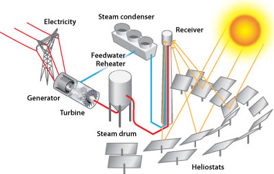
Power Tower CSP
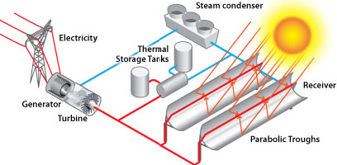
Parabolic Trough CSP
Image credit: U.S. Energy Information Administration
Concentrated solar has grown in usage in recent years, and the cost of generated electricity has fallen more than 50% into a competitive range with conventional electricity production. The price reduction comes from advances in thermal storage systems, which allows large amounts of heated working fluid to be stored. This enables power plants to deliver energy around the clock and increases the resilience of these energy systems. However, due to the massive scale needed for concentrated solar, these plants are limited to areas that receive very high amounts of direct sunlight, like the American southwest.
Advantages
Energy Independence
Using solar power supports energy independence, providing some protection from electricity price changes.
Unlimited Resource
Although the amount of sunlight can differ from day to day based on time of year and weather concerns, we will never run out of available solar energy.
Emissions-Free
Neither solar panels nor concentrated solar power plants emit greenhouse gases through their operation.
Multi-Use Installations
Solar arrays can be erected over parking lots to protect vehicles or integrated into farms to provide shading for temperature sensitive crops that tolerate partial shading.
No Cost After Installation
Like all renewable sources, solar energy is available at no cost once the infrastructure has been installed.
Net Metering for PV
Net metering allows small scale PV arrays to sell electricity generated that isn’t used back to the electrical utility. Many states have some form of net metering, with regulations based on system size and variations in how credits work.

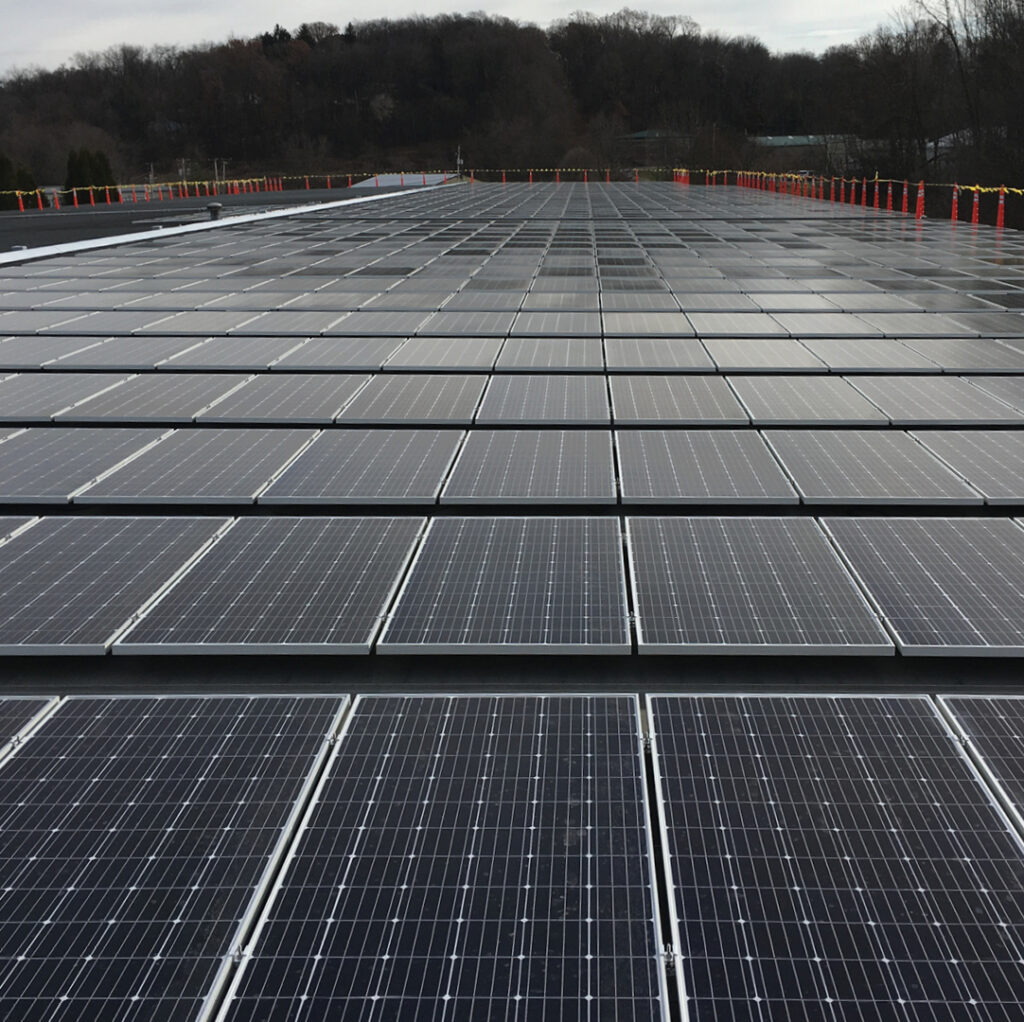
Images: Solar roof installation at EPIC Metals manufacturing plant in Rankin, PA
Things to Consider
Costs
Installing solar power can be costly; however, financial incentives and grant opportunities exist and can lower installation costs. Furthermore, capital costs are lowering for larger-scale projects.
Intermittency
Solar energy production varies throughout the day and throughout the year, and solar energy production is often misaligned with peak energy demands. The primary solution to short-term intermittency challenges is storage, commonly batteries, though thermal and mechanical methods are also available.
Case Studies
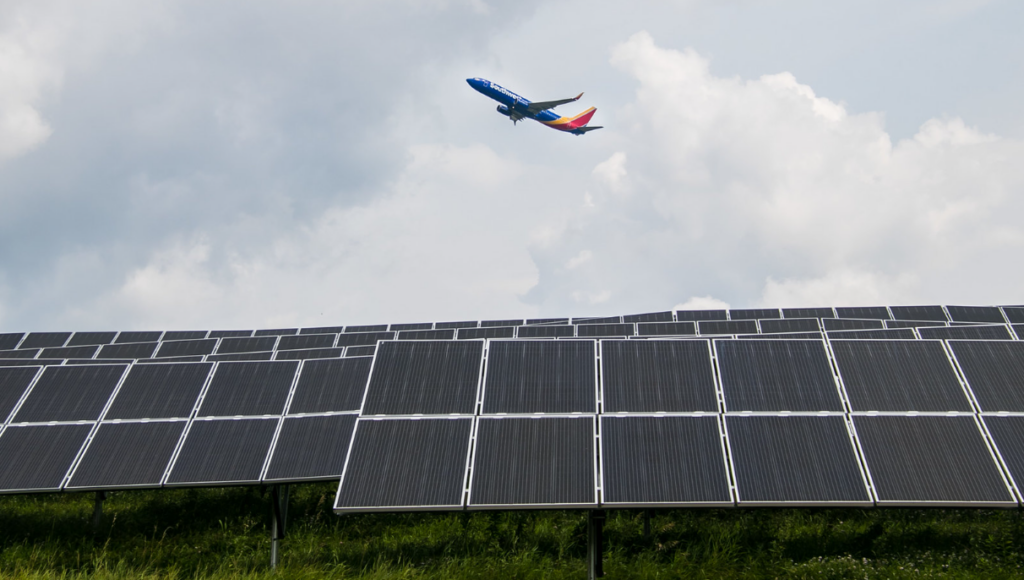
Pittsburgh International Airport
The Pittsburgh International Airport is unique in that it has an on-site microgrid, comprising five natural gas turbines and a 9,300-panel solar array. The microgrid was installed primarily to ensure campus resiliency. In the event of a power outage, the airport can remain operational, keeping planes moving and preventing a logistical domino effect that can delay flights across the nation and globe. In 2025, the airport announced a major expansion of their solar array, more than doubling its capacity by adding more than 11,000 panels by the end of 2027.
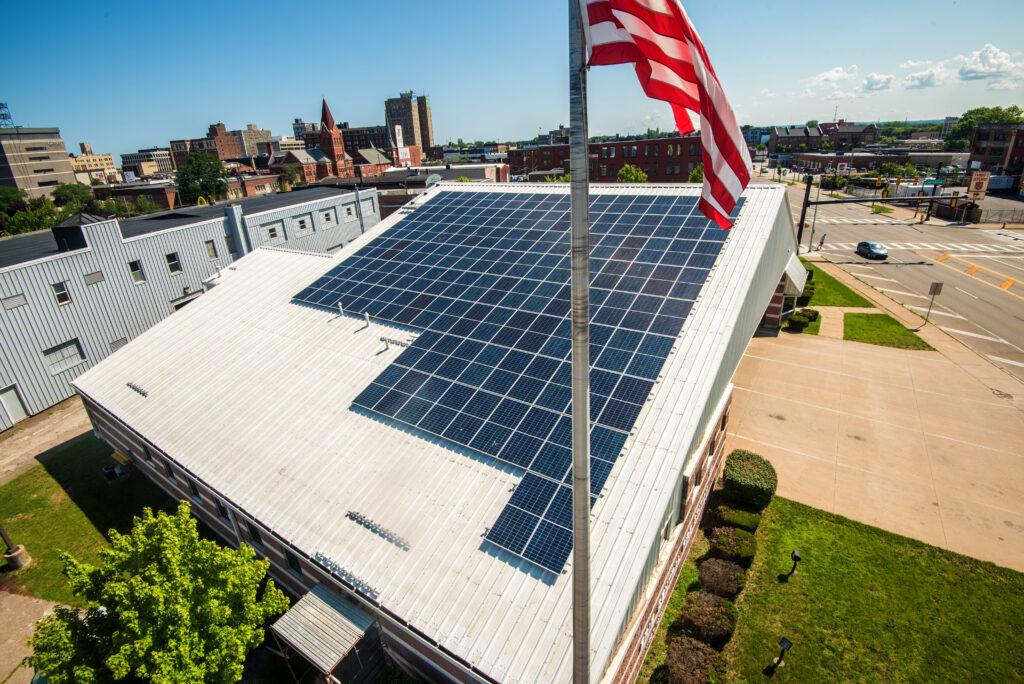
Erie Central Fire Station
The Erie Central Fire Station installed an 88 kW rooftop solar array with battery backup in 2023. This 225 panel system provides over 100% of the station’s annual electricity needs, and the batteries provide additional resiliency benefits. In the event of a power outage or major disaster, the batteries have enough capacity to power the station for up to 7 days. This allows the station to serve as a local resiliency hub for the community, providing emergency services even in the midst of major disasters.
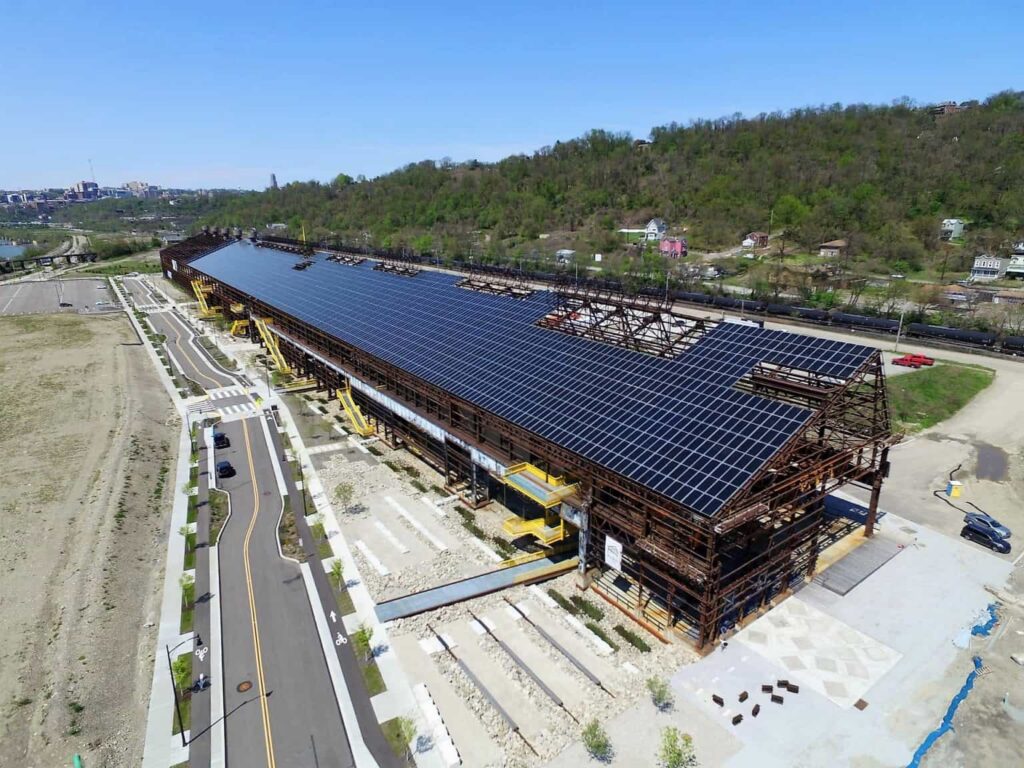
Mill 19 at Hazelwood Green
The largest sloping rooftop solar array in the U.S. is located at Mill 19 at Hazelwood Green, a 178-acre former brownfield site along the Monongahela River in the City of Pittsburgh. The former steel mill’s super structure now supports 110,000 square feet of high-powered solar panels that cover the entire rooftop area, producing over two million kilowatt hours (kWh) per year.