
Pittsburgh International Airport
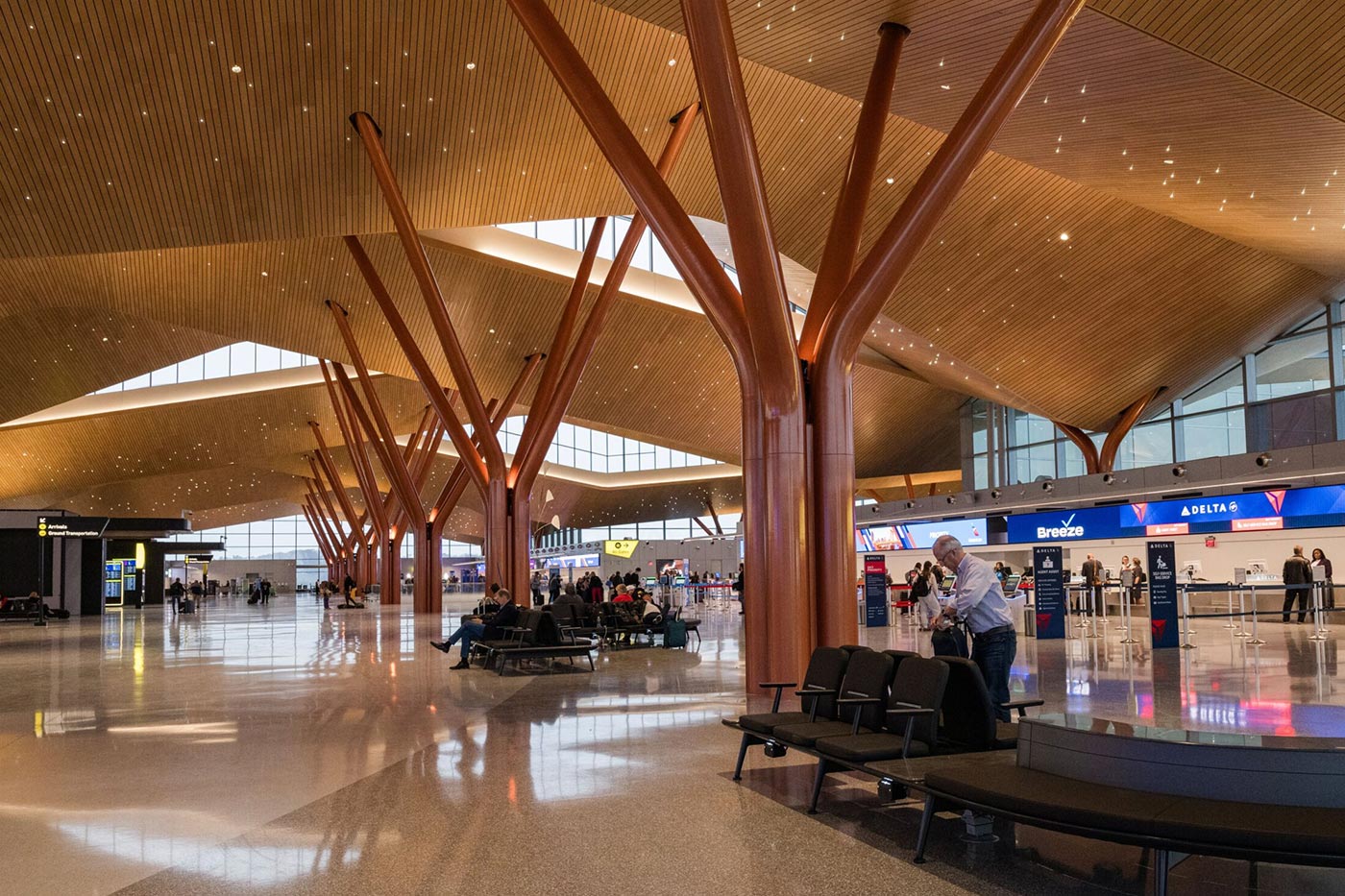
A project transformative in design, function, and impact, the Pittsburgh International Airport Terminal Modernization Program (PIT TMP) delivers outstanding user experience, a commitment to sustainability, and design guided by the principles of nature, technology, and community.
Project Overview
Photo Credits: Ema Peter, courtesy Allegheny County Airport Authority | Video: PIT Terminal Modernization Program
The PIT TMP has received much deserving attention for its design and sustainability initiatives, and as the Airport Authority’s publicly visible infrastructure it offers one glimpse into their ambitious work on driving sustainable changes across their operations, grounds, and client offerings.
The average person experiences Pittsburgh International Airport (PIT) as a passenger, but the airport operates as a complex ecosystem serving the needs of passenger airlines, travelers, cargo shippers, terminal tenants, connecting airports, and regulatory environments. Within this ecosystem, PIT is establishing itself as an industry-leading air travel hub by advancing several pillars of sustainable development it its growth and evolution, not just nationally but globally.
While over 20 other 2030 Districts operate across the country and Canada, PIT was the first airport to commit to a 2030 District and has demonstrated that environmental and community responsibility is key to creating a world-class air travel experience.
Pillar 1: Efficiency and Conservation
The $1.7B Terminal Modernization Project encompasses a new landside terminal designed by Gensler + HDR in association with luis vidal + architects; and new parking structure, associated roadway, and customer service building led by Michael Baker International.
The terminal’s design includes an infusion of natural light and optimized energy and air quality systems, offering energy efficient practices that directly contribute to passenger and staff experience in the facility.

Behind the scenes, its baggage handling upgrades have saved energy and will reduce costs to the tune of $18M annually.
The removal of the tram shuttle, which consumed a staggering 3 megawatts of electricity each time it moved to transport passengers between the landside and airside terminals, led to a massive energy reduction starting on day one of the new terminal operation.
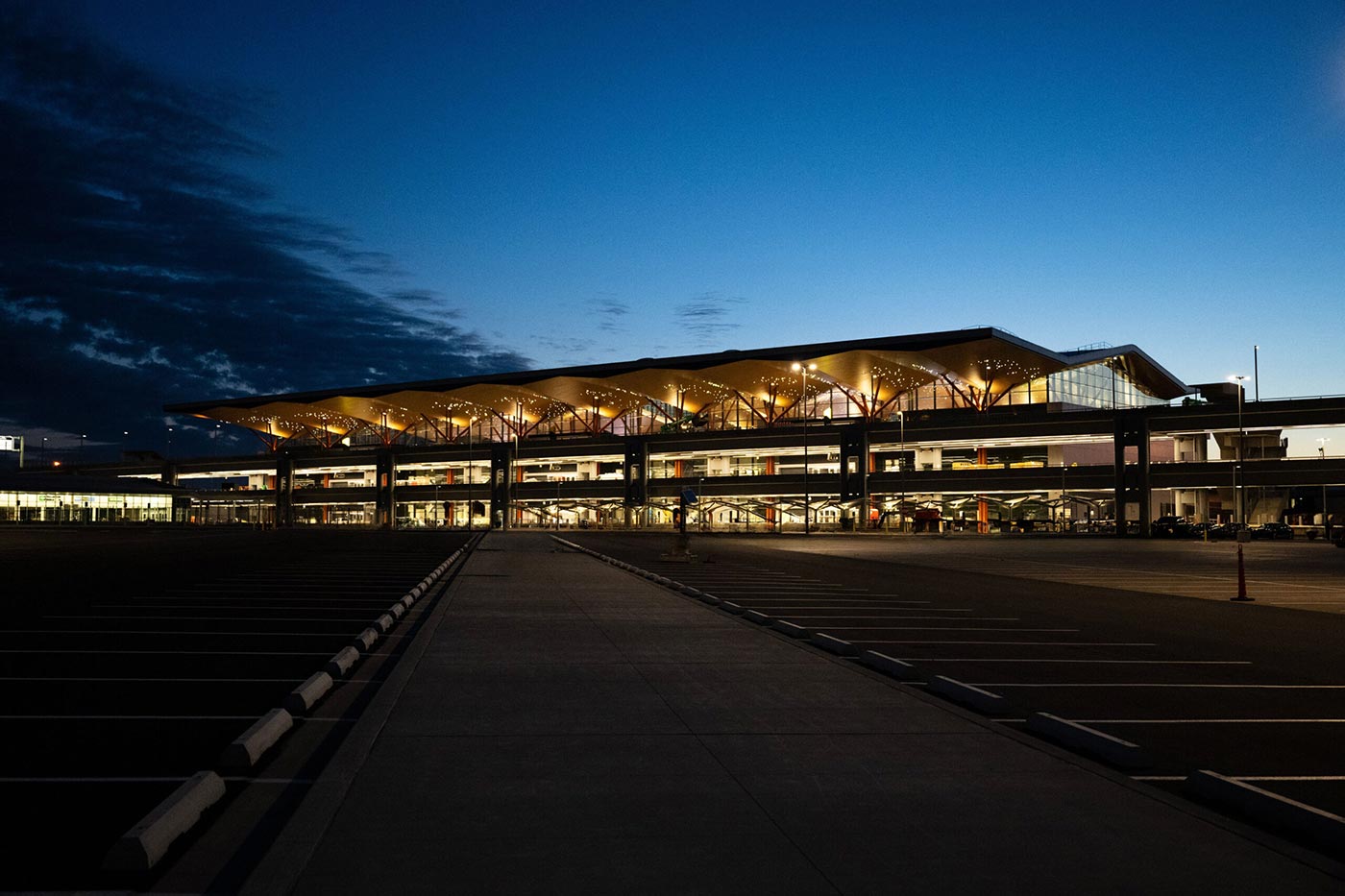
On track to obtain LEED Gold certification, the new terminal building features an undulating roof that enables rainwater harvesting for use in irrigating outdoor terrace gardens, along with native landscaping, rainwater retention swales, and low-flow fixtures, all of which reduce use of potable water.
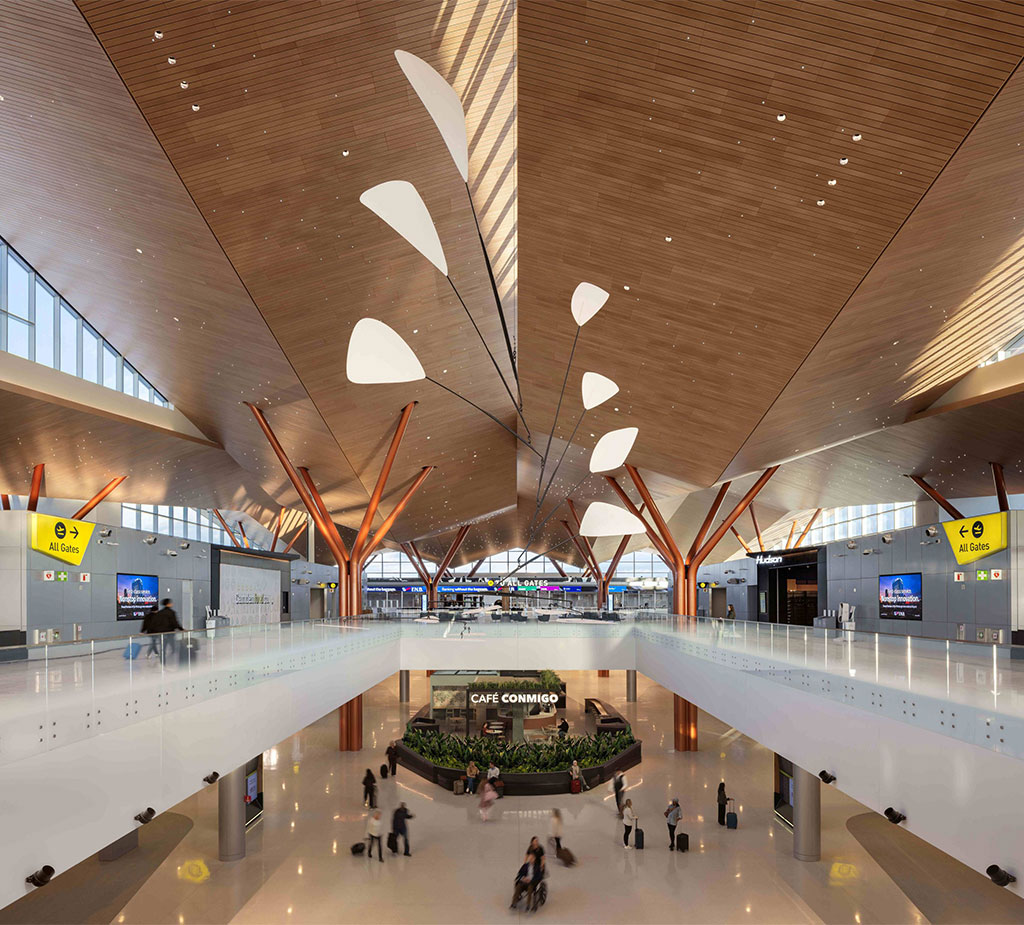
Supporting all of this is an intentional multi-phase construction effort that prioritized local workforce, incorporated high rates of locally produced and recycled content materials, and diverted a staggering 99% of construction waste away from landfill disposal back into downstream markets or for reuse on site – a shining example of the regenerative possibility of local circular economies.
The project also incorporates a new parking garage, thoughtfully designed to ensure access for visitors of all abilities as part of the airport’s commitment to Universal Access. Smart Parking Guidance System shows real-time space availability and digital displays provide a live count of available spaces per level and row, saving passengers time and reducing exhaust from cars circling for spaces.
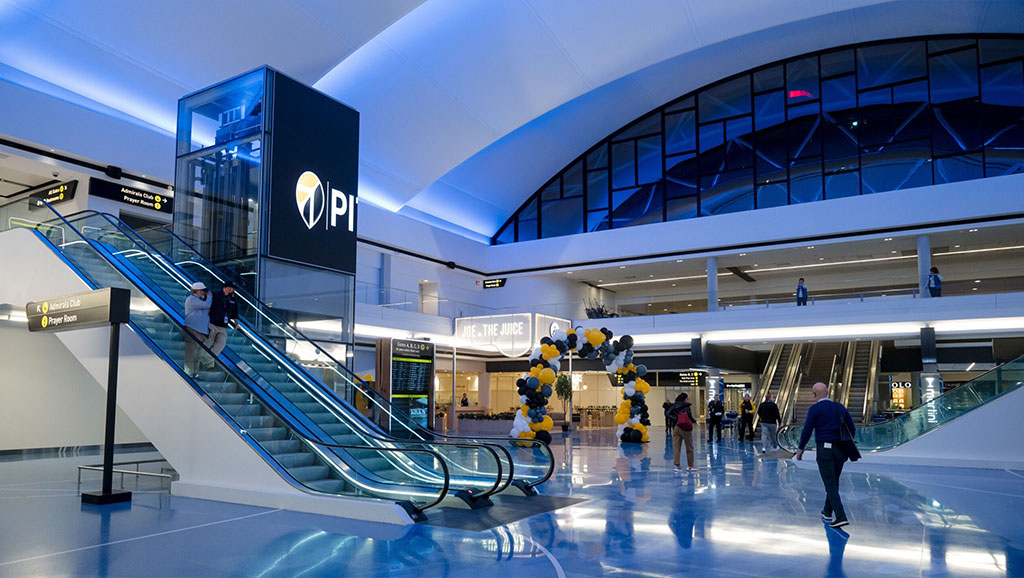
The Allegheny County Airport Authority (ACAA) is also advancing a wide array of resiliency and innovation initiatives across airport grounds and operations.
Working with The Efficiency Network (TEN), all runway lights are being upgraded to LEDs. This is no simple project: besides meeting required FAA regulations, the retrofit will replace several thousand runway lights that guide aircraft landings, takeoffs and taxiing, all while ensuring the airport continues to function normally.
The airport’s central utility plant, which provides heating and cooling for all three airport terminals, is being assessed to determine the best avenue for updating the equipment to improve the plant’s efficiency.
Pillar 2: Resiliency
The airport is unique in that it has an on-site microgrid, comprising five natural gas turbines and a 9,300-panel solar array. The microgrid was installed primarily to ensure campus resiliency. In the event of a power outage, the airport can remain operational, keeping planes moving and preventing a logistical domino effect that can delay flights across the nation and globe.
In 2025, the airport announced a major expansion of their solar array, adding more than 11,000 panels by the end of 2027.
Pillar 3: Innovation
The Airport Authority is embarking on groundbreaking initiatives that will contribute to its rise as a regional and national economic and industry hub.
The ACAA is developing partnerships to produce sustainable aviation fuel (SAF) on the airport grounds, a process that uses agricultural waste and other biobased materials. While still in the early design stages, the expectation is that they will be able to produce enough SAF to not only keep all the planes at the airport fueled, but also to export fuel to nearby airports. SAF would support PIT’s resiliency objectives by offering a domestic raw material source that is not impacted by global trade markets and can be immediately used in existing airplanes with no modifications.
The environmental benefits of SAF are immense: use of SAF releases 60-80% less carbon emissions than traditional jet fuel, and less particulate matter in the exhaust, resulting in reduced contrail formation, which significantly contributes to global warming.
The airport has also supported hydrogen and biofuel research and pilot projects, offering a glimpse into its long-term strategy for leading in the global airline industry.
Building Performance and Project Sustainability Statistics
Terminal Modernization Program (full scope)
- 99% construction and demolition diversion, including 15,600 tons of concrete crushed and reused onsite
Customer Service Building
- 37.84% indoor water use reduction below the baseline
- 46.3% energy cost savings below the baseline
Parking Garage
- 75%+ of materials manufactured within 300 miles of Pittsburgh
- 60% regional labor
Design & Development Team
- Advantus Engineers, MEP & Sustainability Consulting Support
- Aero Systems Engineering, Passenger Boarding Bridges/Aircraft Logistics
- Allegheny Airport Authority, Owner
- Allen + Shariff, MEP & Fire Protection Support
- Architectural Innovations, Architectural Support
- AtkinsRéalis, Cost Estimation
- BNP Associates, Baggage Handling System Design
- Building Performance Architecture, Envelope Commissioning
- Burns Engineering, Fire Alarm/IT/Paging/Telecom/Security
- Buro Happold,* MEP Engineer
- Carter Design Group, Irrigation Consulting
- Cerami / Trinity Consultants, Acoustic Design
- Connico, Cost Estimation
- CPI Australia, Concession Planning
- Crawford Consulting, Cost Estimation
- ED3 Consultants, MEP/Fire Protection Support
- evolveEA,* Sustainability Certification Manager
- Fisher Marantz Stone, Lighting Design
- Front, Façade Consulting
- Gensler + HDR in association with luis vidal + architects, Terminal Architect
- Green Building Alliance, Sustainability Committee
- Illustrate My Design, 3D Visualization
- Jacobs, Program Management
- Michael Baker International, Terminal Garage and Customer Service Building Architect/Engineer
- Monaloh Basin Engineers, Site & Infrastructure Engineering
- Monmade, Local Artisan/Craft Business Liaison
- Navarro & Wright, Structural Engineering Support
- Neoscape, 3D Visualization
- OJB Landscape Architecture, Landscape Architecture
- Paslay Group, Executive Management
- PJ Dick* / Hunt and Turner Construction, Construction Management
- Renee Piechocki, Public Art Consulting
- RWDI, Wind and Snow Modeling
- Sigma Associates, Electrical Engineering Support
- Simpson Gumpertz & Heger, Code Consulting
- Thornton Tomasetti, Structural Engineering & Sustainability Consulting
- UpStudio, Landscape Architecture Support
Contractor Team
- A.G. Mauro
- Advanced Caulking
- Amelie Construction & Supply, LLC
- Avalotis Corporation
- Braden & McSweeny
- Brightview Landscape Development, Inc.
- Craftworks USA
- D-M Products, Inc.
- Franco Associates
- Gumpher
- Gurtner and Sons
- HB Reynolds
- Honeywell Building Solutions
- Independence Excavating, Inc.
- Johnson Controls Inc.
- Joseph B. Fay Company
- JP Philips
- Kirby Electric, Inc.
- KLE Construction Company
- Kokosing Construction
- Landmark Construction
- Lighthouse Electric
- Mascaro Construction Company, LP*
- P&L Metalcraft
- Phoenix Roofing, Inc.
- Pittsburgh Fire Sprinkler
- Richard Goettle, Inc.
- Roman Mosaic and Tile Company
- Rycon Construction
- Schindler Elevator Corporation
- Sippel Company Inc
- Superior Industrial Insulation
- T.D. Patrinos Painting & Contracting
- Thoroughbred Construction Group, LLC
- Trinity Door Systems
- Vantage Corporation
- W.G. Tomko Plumbing & HVAC
- WAE Balancing
- Wellington Power Corporation
- Wright Commercial Floors
- Wyatt, Inc.
The above is a compilation created from multiple sources. If you were part of the project team but are not listed, reach out to info@gba.org.
*indicates GBA sponsor