Where People and Nature Coexist: Inside Rachel Carson EcoVillage
Bringing people, place, and purpose together, Rachel Carson EcoVillage shows what’s possible when sustainability and community grow side by side.
A Vision Grounded in Community and Place
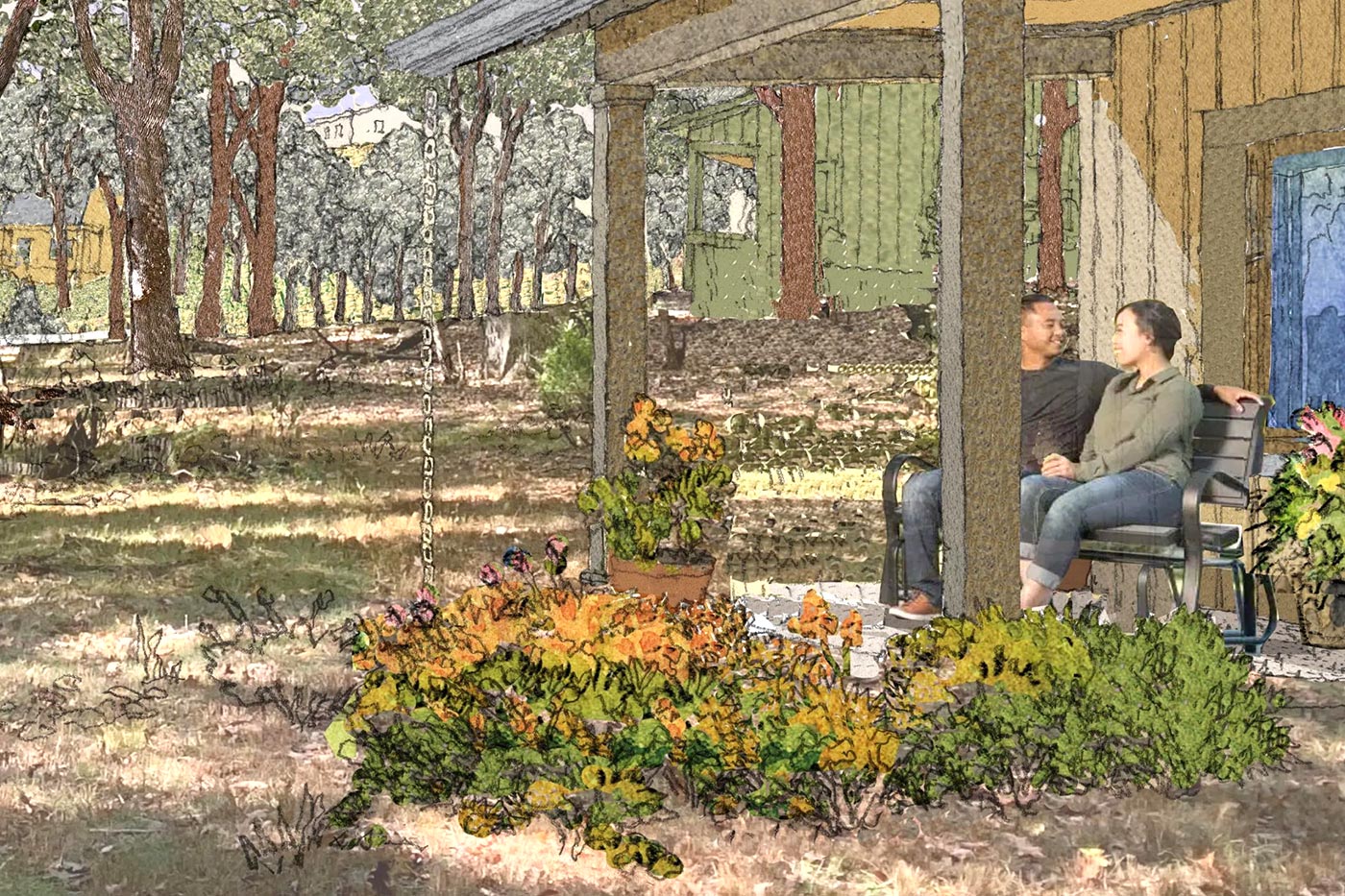
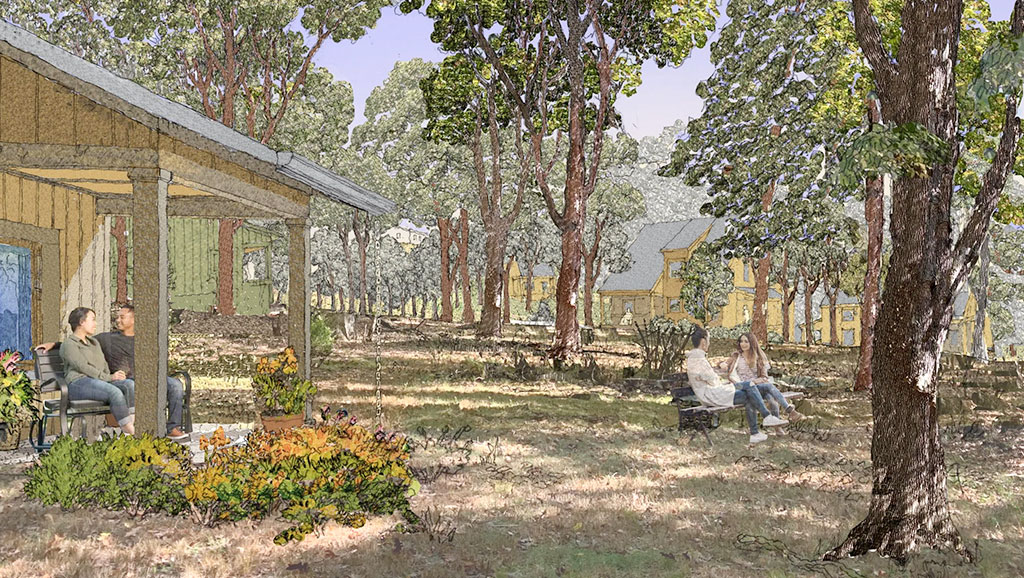
On a wooded hillside in McCandless Township, a new kind of neighborhood is taking shape. Rachel Carson EcoVillage (RCE) is the region’s first cohousing community designed to Passive House standards, surrounded by century-old oak and hickory trees that frame a vision of balance between people and the planet.
For Stefani Danes, RCE Project Manager, this initiative represents more than sustainable construction, it’s a living demonstration of Rachel Carson’s philosophy of coexistence.
“It’s a community of people who care about each other and care about the land. We believe we can make a positive difference in the world around us.”
– Stephani Danes, Project Manager
The EcoVillage took shape after two decades of determination. The Pittsburgh Cohousing Group first envisioned a sustainable, collaborative community in the early 2000s but struggled to find suitable land. The breakthrough came when the Sisters of Divine Providence offered an 8-acre parcel on their Providence Heights campus. The Sisters had declined traditional developers to protect the forested land, a decision that made this collaboration a natural partnership.
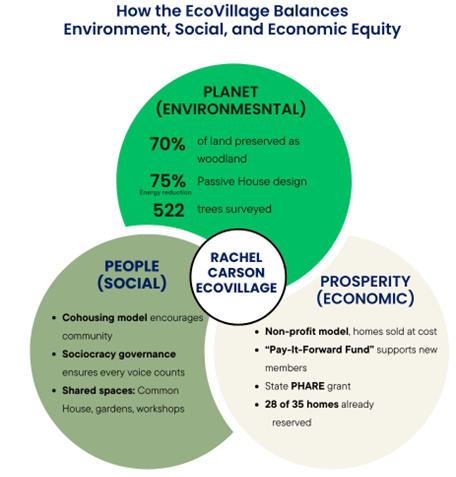
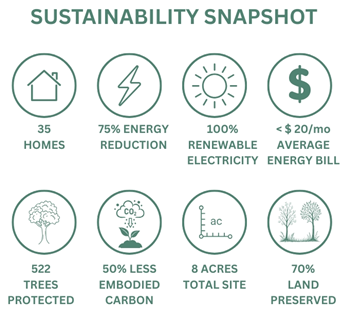
Today, the EcoVillage includes 35 housing units, with 28 already reserved by future residents. Construction is well underway, and the project is expected to be fully completed and occupied by late 2026, marking a major milestone in Pittsburgh’s sustainable housing landscape.
Designing for Resilience
From its earliest sketches, Rachel Carson EcoVillage was designed around one guiding principle: work with nature, rather than trying to control it.
Homes are clustered together to preserve 70% of the site as open woodland, minimizing land disturbance and maintaining ecological integrity. The participatory design process brought together future residents, architects, and sustainability consultants to balance human comfort, social interaction, and environmental performance.
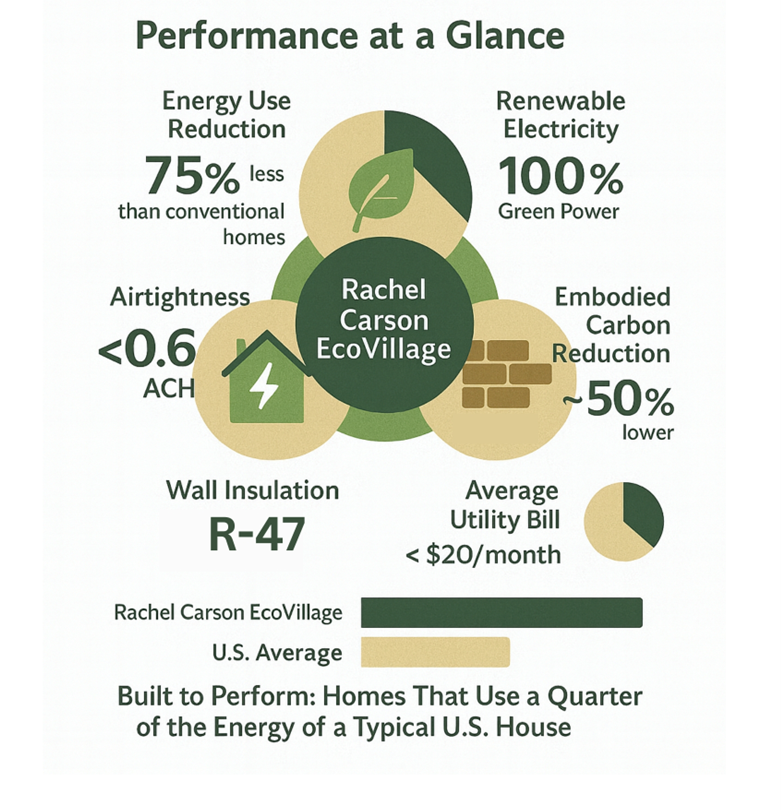
Each of the 35 homes, ranging from 515 to 1,470 square feet, is built to Passive House Institute standards, achieving high energy efficiency and exceptional indoor air quality. The homes include airtight construction (0.6 ACH), R-73 roof insulation, R-47 wall insulation, and R-24 slab insulation, and triple-glazed windows for optimal thermal performance.
Heating and cooling are provided by ultra-efficient mini-split heat pumps, while MERV-13 ventilation systems continuously deliver clean, filtered air. All homes are powered by 100% renewable electricity through Duquesne Light’s Green Power program.
“Our envelope is so effective that even if the power goes out for up to two weeks, the houses stay comfortable. That’s resilience by design.” – Stephani Danes, Project Manager
To reduce carbon emissions and construction waste, the EcoVillage partnered with Blueprint Robotics, a Maryland-based company specializing in precision modular building. Each wall, floor, and roof panel was digitally fabricated off-site, minimizing errors and achieving near-zero material waste.
This prefabrication approach, combined with smart shipping logistics, cut embodied carbon by nearly 50% compared to conventional construction. Even the long-lumber beams were shipped by sea instead of trucked cross-country — a small but meaningful decision that lowered transportation emissions.
Before construction began, the community conducted a detailed ecological survey identifying 522 trees, native plant species, and invasive shrubs like multiflora rose. Invasive plants are now being removed gradually to restore the woodland’s natural ecosystem.
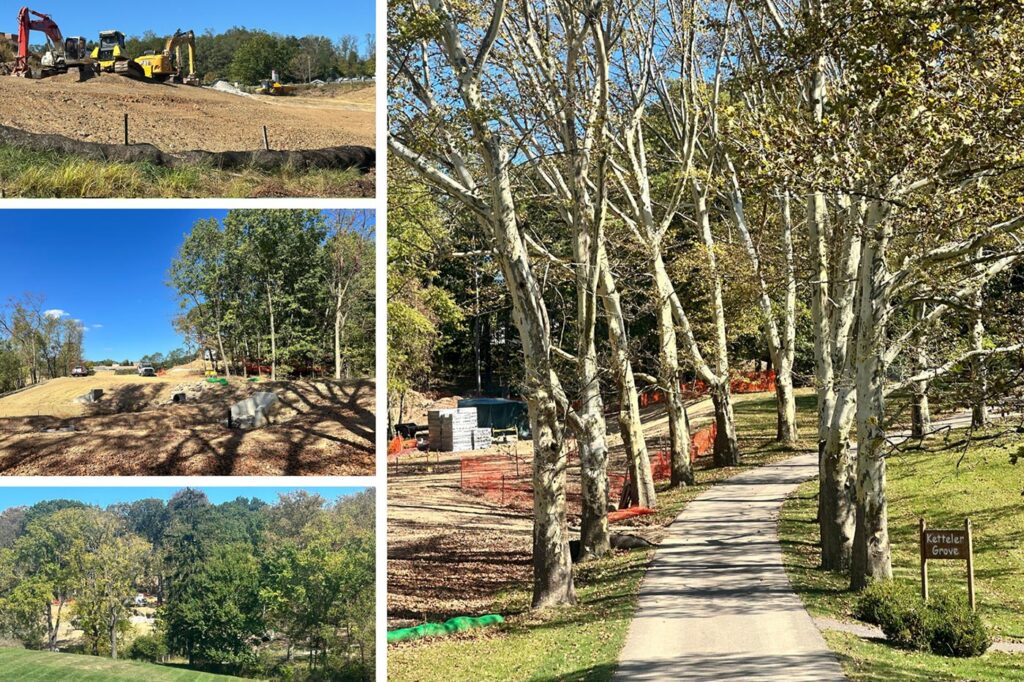
The community took care to minimize environmental impact during construction. All buildings were sited only in areas where the land had previously been disturbed, leaving pristine woodland untouched. In a commitment to net-positive ecology, the EcoVillage is planting more trees than were removed during construction, ensuring the forest continues to grow and thrive for future generations.
Building Fairness, Not Profit
Rachel Carson EcoVillage’s development model is intentionally non-profit and community-owned. Every home is sold at cost; there is no developer markup. All proceeds are reinvested in the shared infrastructure and community spaces.
To ensure accessibility, residents created a “Pay-It- Forward Fund” that helps incoming members with down payments. A state PHARE grant also made it possible for one home to be at half cost, introducing an affordable ownership model within a sustainable framework.
“Our financial structure mirrors our values. It’s about shared leadership and responsibility—principles that keep the community strong.”
– Stephani Danes, Project Manager
The EcoVillage’s Common House serves as its social center, with a shared kitchen, dining hall, guest rooms, and multipurpose space. Residents collectively manage decisions on budgeting, maintenance, and community programming.
To ensure effective, inclusive decision-making, the community uses the Sociocracy governance model—a methodology that promotes shared leadership, distributed decision-making, and active participation from all members. This structure allows residents to “have a voice in an efficient way,” Danes explained, ensuring that sustainability is reflected not just in the buildings but also in how the community functions.
Challenges and Discoveries Along the Way
The EcoVillage’s 20-year journey was marked by persistence, learning, and collaboration. Early setbacks in land acquisition, the technical complexity of Passive House design, and financial constraints tested the group’s resilience.
“The most important discoveries were not technical. They were about people—how to communicate, how to compromise, how to stay aligned when challenges arise.”
Rising construction costs during the pandemic forced the group to adapt. Innovative partnerships, shared investment, and volunteer support kept the project on course. The process, Danes said, reinforced a truth: “Resilient design starts long before the first wall is built.”
Carrying Rachel Carson’s Legacy Forward
The project draws deep inspiration from Rachel Carson’s belief that humans must live as part of nature, not apart from it. Her influence shapes the EcoVillage’s environmental ethic and community spirit.
Residents have formed a Rachel Carson Study Circle to reflect on her writings and host educational events. Plans include interpretive signs that explain the site’s ecological restoration and sustainable systems—transforming the village into a living classroom.
A Living Example
Rachel Carson EcoVillage is more than a housing project; it’s a living example of what can happen when design excellence meets collective purpose. It demonstrates that sustainability isn’t only about technology; it’s about community, equity, and care.
“Rachel Carson EcoVillage shows that living sustainably doesn’t mean giving things up,” said Danes. “It means gaining connection, resilience, and purpose.”
By the Numbers: The EcoVillage Impact
METRIC
RESULTS
Total Homes
35
Homes Reserved
28
Airtightness
.6 ACH
Embodied Carbon Reduction
~50%
Renewable Electricity
100%
Average Utility Bill
<$20/month
Trees Surveyed
522
Land Preserved
70%
Price Model
Cost-based, no profit
Governance Model
Sociocracy
From Vision to Reality: The Rachel Carson Eco Village Journey
2000s: Concept introduced by Pittsburgh Cohousing Group
2023: Partnership with Sister of Divine Providence secured
28 of 35 homes booked
Spring 2026: Full occupancy expected
Building Together: The Project Team
Rachel Carson EcoVillage was brought to life through the collaborative efforts of a dedicated team:
Project Leadership
Stefani Danes, RCE Project Manager
Key Partners
Craig Stevenson, The Auros Group
Ben Ledewitz, Fourth River Workers Guild
Andrew Forney, evolveEA
Barton Kirk, Ethos Collaborative
Sister Michele Bisbey, Provincial Director, Community of Divine Providence, Provincial Leadership Team
Land Partner
Sisters of Divine Providence, Providence Heights Campus