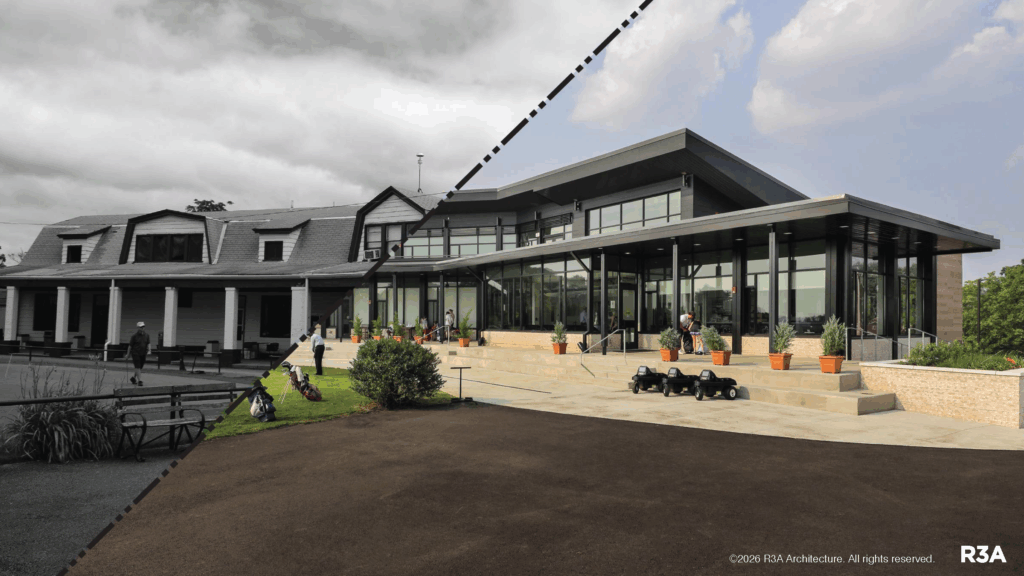
The First Tee – Pittsburgh Arnold Palmer Learning Center
Owner
The First Tee-Pittsburgh
Architect
R3A Architecture
General Contractor
Massaro Construction
Civil Engineer
D’Appolonia Engineering
MEP Engineer
CJL Engineering
Structural Engineer
Atlantic Engineering Services
Landscape Architect
Moore Design Associates
Commissioning
H.F. Lenz Company
Project Overview
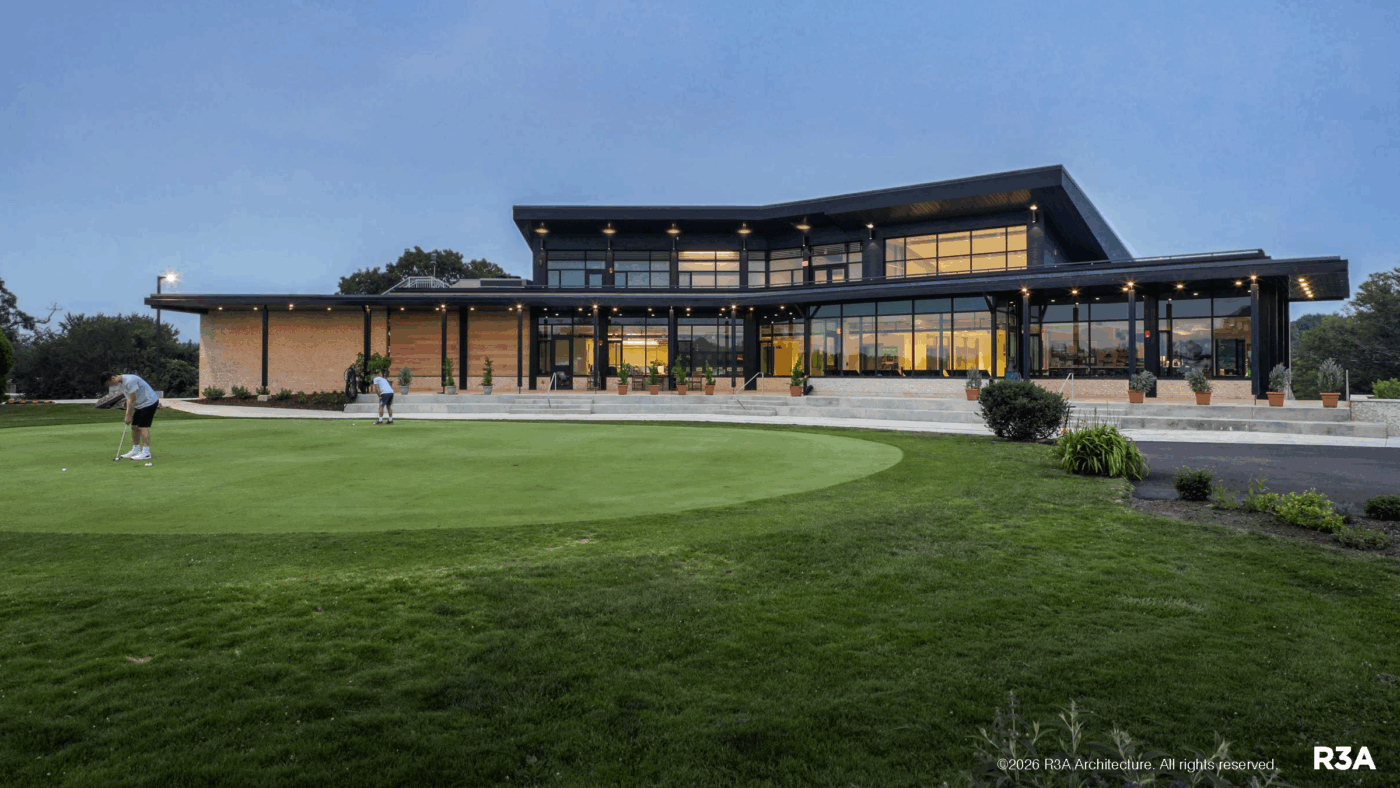
Built in 2021 on the site of the former club house on the Bob O’Connor Golf Course in Schenley Park, the Arnold Palmer Learning Center (APLC) is an outstanding example of design that beautifully integrates legacy, sustainability, energy efficiency, organizational mission, and community.
Covering 13,000 square feet, the project, which is targeting LEED Silver V.4 certification, creates a vibrant social and educational hub, transcending generational and socioeconomic boundaries. It includes versatile spaces for retail, education, training, socializing, and meetings, making it a dynamic gathering place for various user groups. The project establishes a safe and welcoming atmosphere that reinforces its role as a community-centric hub, blending seamlessly with the historic charm of the golf course and public park.
The golf clubhouse, pro-shop, kitchen, classrooms, and meeting spaces prioritize efficiency and sustainability through design that emphasizes energy performance, water conservation, responsible material selection, and indoor environmental quality.
In this vibrant space, First-Tee Pittsburgh provides growth and development programs through the game of golf, making this otherwise usually inaccessible activity available to children of all ages and backgrounds. Accessibility and inclusivity were prioritized in the project, enabling the facility to better support youth development and ensure the facility would continue to serve community needs.
“Growing up in the city of Pittsburgh, I had the opportunity to spend countless hours learning golf at Schenley Park through the First Tee. It was an incredible experience and one that changed my life. But what was missing from that experience was a facility that could match my drive to improve as a golfer and one that could accommodate my desire to spend every waking moment at the course. What is unique and special about the APLC is that, for the first time, the kids in the inner city of Pittsburgh will be given access to the resources typically reserved for the more privileged suburbs. No longer will potential be stifled by a lack of equipment, amenities, or community. This is a wonderful addition to my life and the lives of many Pittsburgh kids.”
The design process was informed by extensive research and collaborative workshops with the First Tee-Pittsburgh (TFTP) staff, community members, and stakeholders.
During the process, the designers came up with the concept of the “anatomy of a clubhouse,” which ensured that the new facility honored the historical elements of the original building and the site’s layout while also identifying the concept of a collector, which would improve visibility for safety and address the significant difference in elevation between the course and the entry. The design incorporates modern sustainability features and harnesses natural views and ventilation, along with a thoughtfully planned landscape that complements the surrounding environment.
Reflect | Aspire | Execute
APLC reinhabits the former Schenley Park Golf Course Club House. Built in 1897 as a 9-hole private course, it opened to the public by 1912. A century later, the clubhouse fell into disrepair and was deemed unfit to support the new learning center’s functions. In the early 2000s, TFTP and local community members sought to create a lasting, sustainable, and flexible facility that would support the education of future generations. This space would echo the legacy of its 100-year-old predecessor.
Today, APLC brings unprecedented modern amenities to the historic course and enhanced opportunities for community events and engagement. APLC is more than a building; it is a living embodiment of past wisdom and future promise, dedicated to nurturing minds for centuries to come.
The Collector
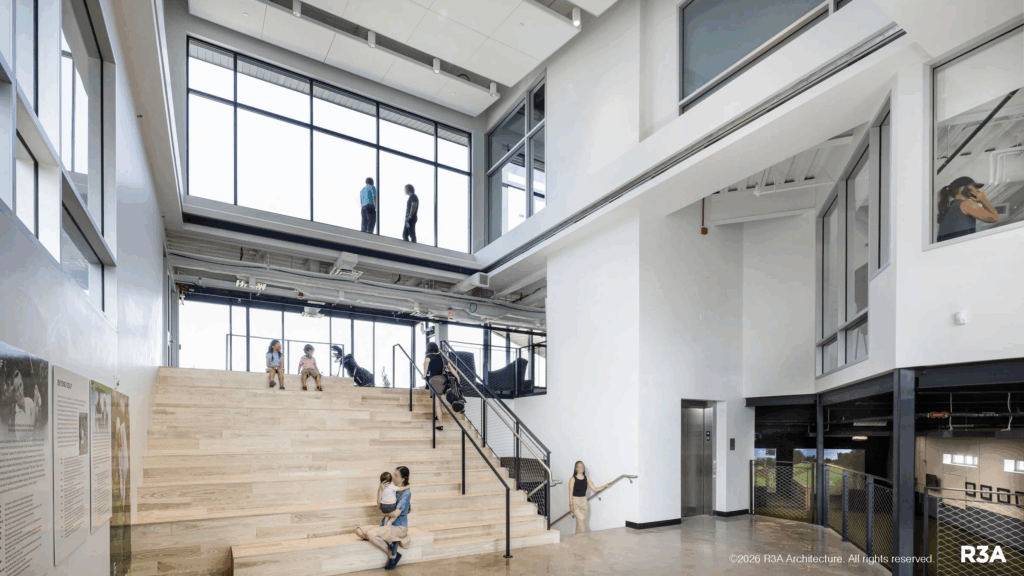
The “collector” is central to the interior design. The forum stair anchors the three-story space, which provides a place for visitors to socialize and auditorium seating for students to sit for lessons. The primary objective of the “collector” is to improve visual connectivity between all building levels, bridging a 6’- 0” height difference between the course level and the parking level.
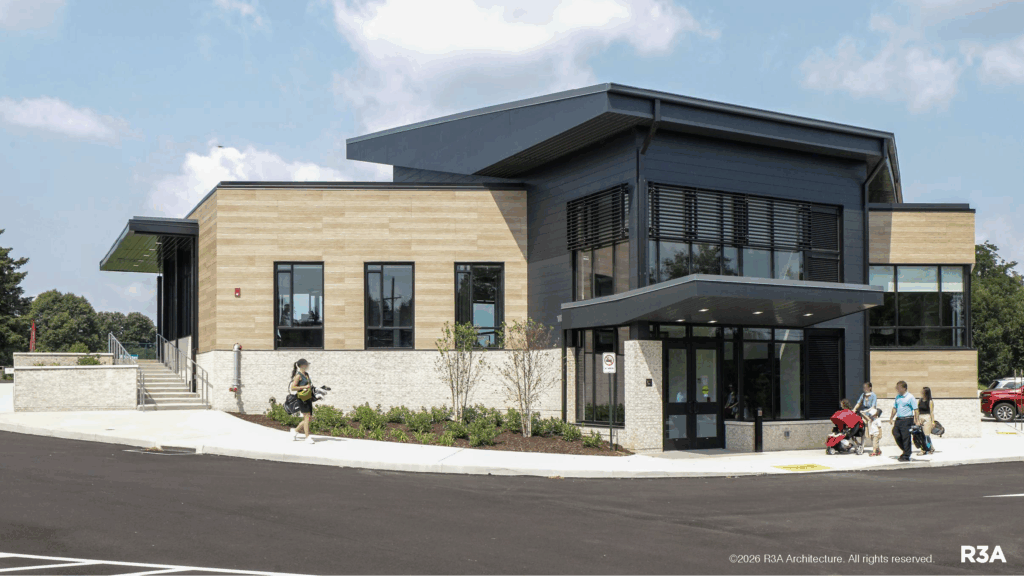
The “collector” enables formal entries/exits from both the course and parking lot levels, ensuring a welcoming space.
Design For Resolution
Programmatic challenges arose when designers faced space and budget limitations. To this end, the interior design needed to address the needs and support TFTP’s program.
To fully resolve the challenges, the designers held a series of interactive workshop sessions with TFTP staff, stakeholders, and, most importantly, community members. Participants were prompted with what they thought would be their social aspirations/challenges and spatial aspirations/challenges. From this engagement, it was clear that flexibility, natural lighting, and being a safe place for youth were priorities. As for challenges, with the limited space, TFTP staff were worried about not having room for program growth.
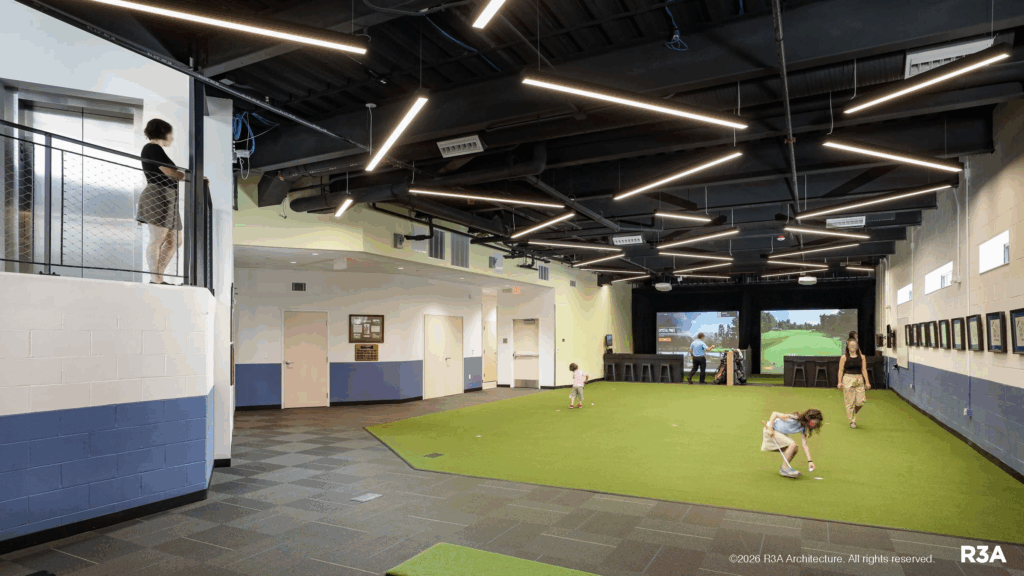
Designers accommodated future growth by crafting dual-purpose, adaptable spaces. The expansive boardroom and classrooms feature versatile furniture that seamlessly transforms into quiet workrooms or hybrid training areas. Additionally, the indoor green, a generous multi-use space, enables year-round activities; during inclement weather, it serves as an indoor golfing facility for classes and visitors alike.
Expansive exterior glazing floods the interior with natural light, while generous interior glazing ensures this illumination permeates throughout the entire structure. This design strategy not only harnesses natural daylighting but also prioritizes safety. High visibility throughout the space facilitates effective monitoring, particularly for children’s safety.
Design For Longevity
To honor and preserve the beloved historic clubhouse, the design team reimagined the massing and exterior with a bold, contemporary interpretation of the original 1902 structure. Using advanced materials that resemble the landmark building, recycled materials, and reduced material off-gassing, designers ensured enhanced durability and longevity, seamlessly blending tradition with modern innovation while prioritizing the user’s wellness and sustainability.
Design For Energy
The passive design goal was to address the efficiency of TFTP by manipulating daylighting. The roof and its positioning were carefully calibrated according to a year-round sun angle study, ensuring that the sun’s rays penetrate the many-windowed façade, heat the concrete floors only in the cool months, and are repelled during the summer.
The space also utilizes a DOAS (Dedicated Outdoor Air System), which provides 100% fresh outdoor air to the building and uses the exhausted air to condition incoming fresh air. This system reclaims energy and, in turn, saves a significant amount on energy costs compared to a traditional HVAC system.
Design For Water
Collaborating with the landscaping and engineering teams, the designers aimed to create a system that would not only slow down stormwater infiltration into the surrounding hillside for more efficient management but also reuse the water on-site to reduce the building’s water waste.
The selection of plants was carefully considered to achieve a layered root system. The most effective layering includes trees such as the royal star magnolia, perennials, and grasses like switchgrass and daylilies. With this layering of species, their root systems help absorb and slow water, preventing erosion. Once water slowly passes through the rain garden, a system of pipes redirects the water to the nearby stormwater system and waters the 9-hole course.